Marvis Minis and the Rise of Distributed Observability
Sensorless visibility is uniquely positioned in enterprise networking.
Juniper introduced a Marvis Minis and just extended the capabilities beyond your network.
There is now application visibility, client-to-cloud, across regional points of presence (PoPs), proactively performing synthetic testing for real-time visibility from the client to the cloud. No need for Raspberry Pis, third-party sensors, or site-by-site deployments.
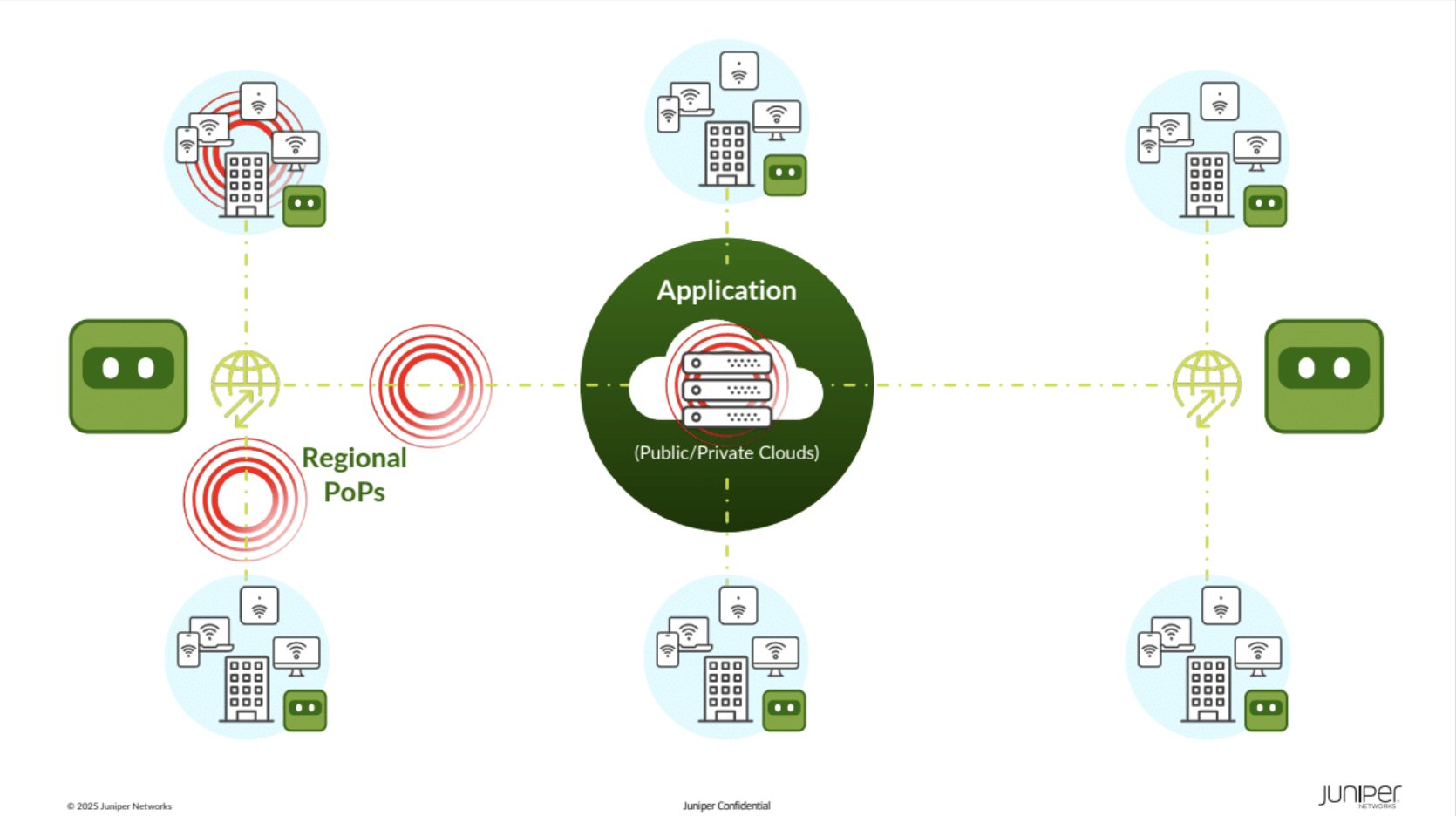
Imagine troubleshooting an intermittent issue at a branch office hundreds of miles away. Instead of relying on packet captures or flying someone out, you get app-level insights with context. That adds value to operational efficiency.
Marvis Minis simulate client behavior from the wired network to the WAN, offering visibility into things like DNS resolution, HTTP response times, and SaaS application performance. However, they don’t test the wireless (RF) layer—so if you’re troubleshooting poor Wi-Fi signal quality, coverage holes, or RF interference, you’ll dig into the Mist Service Level Expectations (SLEs).
Right now, I’m using Raspberry Pi’s to monitor end user experience with my own monitoring platform. It’s not very scalable, it can't tell me about any application issues, and it adds additional management overhead.
Bundled within the Marvis subscription, these Minis offer distributed telemetry and application insight without extra infrastructure—enabling continuous, client-to-cloud visibility across the network path.
With Mist’s native AI engine behind the scenes, these distributed agents allow teams to pinpoint root causes faster.
Whether it’s a failing ISP, degraded SaaS experience, or DNS timeout, before users even notice.