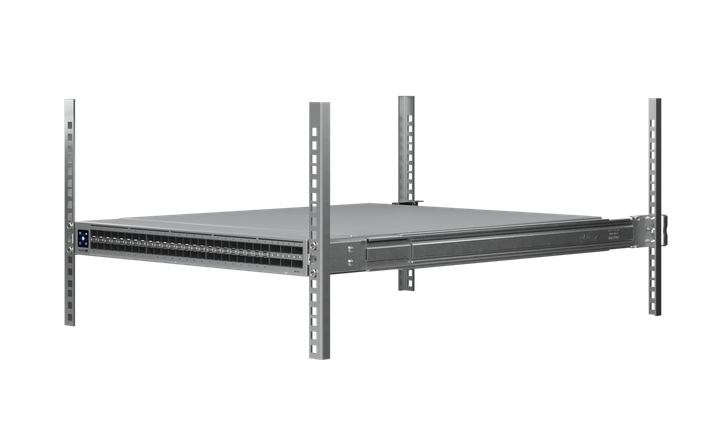
Cisco Unveil's Meraki Campus Gateway: A Cloud-Managed Overlay for Complex Networks
When you think of Meraki, you think of simplicity. Zero-touch provisioning. Clean dashboards. Minimal complexity.
And then Cisco announced the Meraki Campus Gateway (MCG).
The simplicity model begins to break down in large campus environments—such as universities, hospitals, and distributed enterprises—where mobility, high availability, and centralized control become essential requirements.
The Meraki Campus Gateway is Cisco's effort to reduce a full redesign of campus architecture. And it's not a controller but more-so a tunnel terminator. Although, the local status page has resemblance of a C9800.
Why Campus Deployments are Challenging for Meraki
Meraki thrives in small to medium sites, where controllerless cloud management makes perfect sense. But campuses are different:
- Clients move between APs, floors, and buildings—all the time.
- Redundancy isn’t optional.
- Scaling introduces large problems - centralize wireless AAA and client traffic.
Without tunneling, you’re left hoping for seamless roaming. And without centralizing the data plane, controlling broadcast storms, mDNS, or QoS across large networks becomes very difficult.
Meraki needed a way to scale up its simplicity—without sacrificing control.
What Is the Meraki Campus Gateway?
The Meraki Campus Gateway (MCG) is a new deployment option that enables Meraki APs to tunnel traffic back to a centralized gateway—similar to a lightweight WLC overlay. But it does this without ditching the Meraki dashboard or cloud-first model. You're not managing Meraki MRs with the Customer Gateway. The management still lives in the dashboard.
Key Features:
• VXLAN tunneling of WLAN traffic
• QUIC-based control plane replaces CAPWAP
• Zero-downtime failover via stateful HA
• AP load balancing across MCG nodes
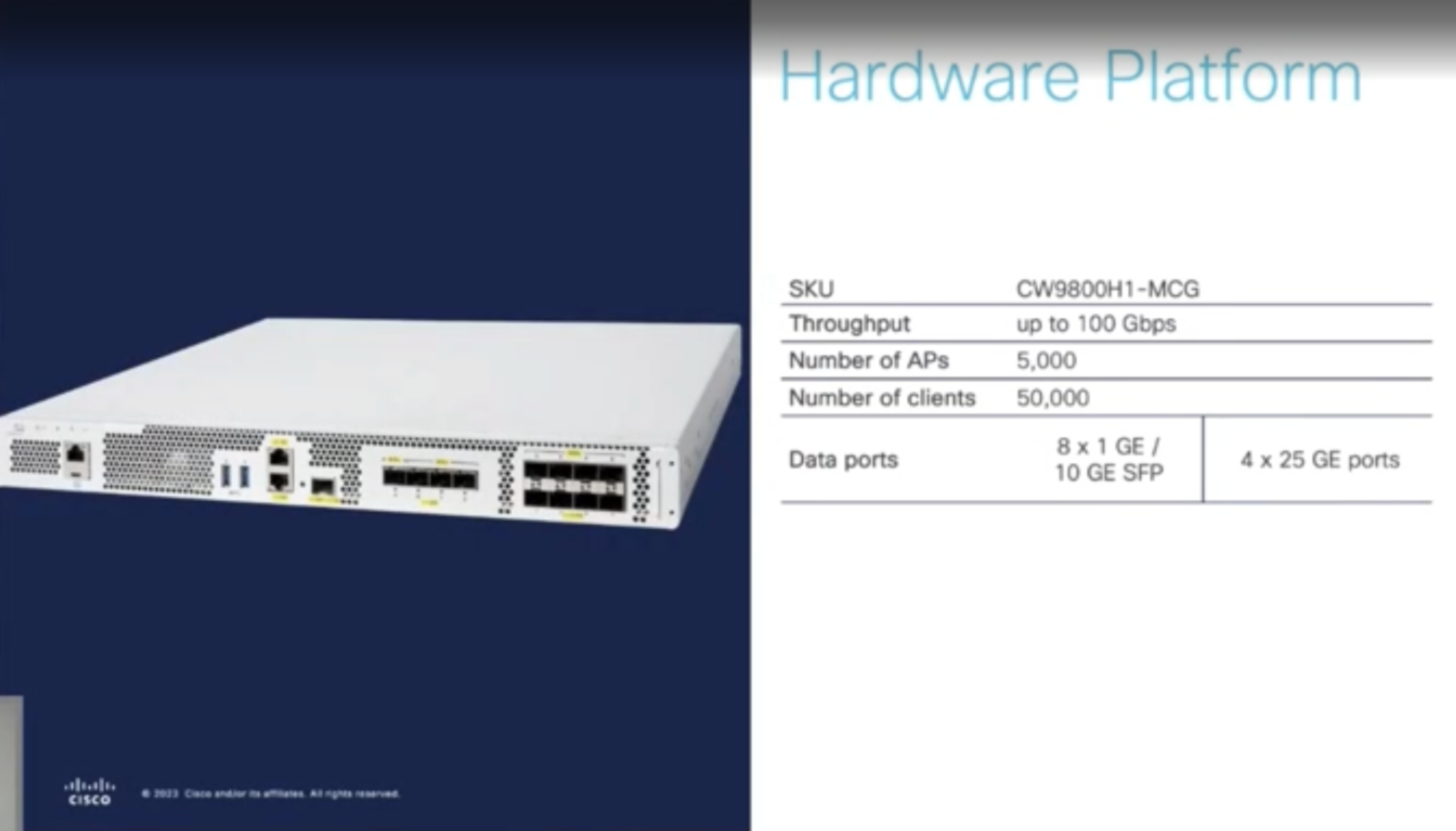
• Same hardware platform as a Cisco WLC, but with new logic
This is Cisco listening to larger customers. Those who love the Meraki dashboard—but we need centralized traffic control, roaming consistency, and HA across the campus.
Specifically, higher education can benefit from this. Universities are managing dozens of buildings and need:
• Policy enforcement at scale
• Consistent user experience across roaming domains
• Operational continuity during failovers
Additional features you'll get at launch:
- ARP proxy
- LAG support
- VLAN pooling
- Scale to 5k APs and 50k clients
- RADIUS proxy
- mDNS Gateway
- Wi-Fi Personal Network
But there's a catch...
The Campus Gateway may solve a real problem—but it also introduces real complexity. And it ships with some constraints:
| ⚠️ Constraint | 💬 Detail |
| Single cluster | Can’t scale horizontally across Meraki networks (yet) |
| RTT < 20ms | Must be in the same geographical area, same cluster |
| Same network for MCG + MRs | Can’t tunnel across Meraki network boundaries |
| All WLANs must be tunneled | No local bridging of WLANs (at launch) |
| Requires LACP, DHCP, VLAN configuration | Not quite plug-and-play for Day 0 |
For a platform known for its ease of use, the Campus Gateway takes a sharp turn into design-heavy territory. And the configuration menu is different compared to how other network devices are configured.
Which Access Points are Supported?
- Wi-Fi 6
- MR44, MR36, MR36H, MR46, MR46E, MR56, MR76, MR78, MR86
- Wi-Fi 6E
- MR57, CW9162, CW9163, CW9164, CW9166
- Wi-Fi 7
- CW9178, CW9176, CW9172i, CW9172H
Minimum software requirement is MR release R31.2.
Meraki's Architectural Shift
This is a big philosophical shift for Meraki.
Traditionally, Meraki kept it simple:
• No controllers.
• No tunnels.
• Flat Layer 2 where possible.
But the new gateway introduces:
• Tunneled SSID VLANs
• VXLAN encapsulation
• Stateful HA and failover control planes
That’s a huge leap—and while it offers more power, it also requires more planning.
My Take: Ambitious, Necessary… and a Bit Late
From a technical standpoint, the Meraki Campus Gateway is absolutely the right move. It opens the door for Meraki to support environments that were previously off-limits.
But from a market perspective? It feels a step behind.
Many of those large campus customers have already:
• Adopted controller-based or cloud-based solutions from other vendors
• Moved to fabric-based or intent-driven architectures
• Built SD-Access or overlay networks for segmentation
Getting them back won’t be easy.
Still, I respect what Cisco is trying to do here. They’re acknowledging that cloud simplicity doesn’t scale quickly. And they’re building tools that give network engineers options.
The Meraki Campus Gateway isn’t for everyone. But if you manage a complex campus network and you’ve wanted:
• Roaming consistency
• Centralized traffic control
• Meraki-level simplicity with controller-like behavior
…then this may be the overlay you’ve been waiting for.
Did you find this useful? Subscribe to the newsletter for more real-world insights.